4.1 Statutory Obligations
SWSAHS is one of 17 Area Health Services in NSW which are responsible for providing public health care services to a geographically defined population.
The primary purposes of an Area Health Service, as defined by the Health Services Act 1997, are to:
- provide relief to sick and injured persons through the provision of care and treatment; and
- promote, protect and maintain the health of the community.
In fulfilling this role, the Area Health Service has responsibility for:
- managing the public hospitals, health institutions, health services and health support services under its control;
- ensuring the efficient and economic operation of its health services and the maintenance of adequate standards of patient care;
- planning of health services, in partnership with the community and other agencies; and
- providing training and education and undertaking research and development as relevant to the provision of health services.
4.2 Organisational Structure
SWSAHS is administered by a Board consisting of members appointed by, and responsible to, the NSW Minister for Health. The role of the Board is to ensure that the Area fulfils its functions as defined by the Health Services Act and the Area’s Performance Agreement as negotiated and agreed with the Director-General of NSW Health.
The day to day management of the Area is the responsibility of the Area Chief Executive Officer and Area Executive Team. SWSAHS is comprised of Sector Health Services, each with a Sector General Manager. These are Bankstown, Fairfield, Liverpool, Macarthur and Wingecarribee.
4.3 Geographical Boundaries
SWS comprises the seven local government areas of Bankstown, Camden, Campbelltown, Fairfield, Liverpool, Wingecarribee and Wollondilly and covers an area of 6,237km2.
Settlement varies from quite dense suburban residential development in Bankstown to scattered rural townships in Wingecarribee and Wollondilly. Parts of the Area are quite geographically isolated, particularly in Camden, Wingecarribee and Wollondilly and the western parts of Fairfield and Liverpool.
4.4 The People
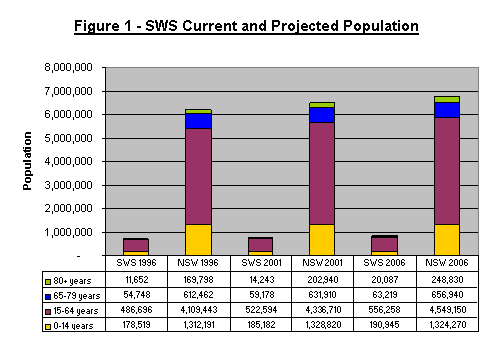
SWSAHS’s population is projected to grow by 13.7% from 731,615 in 1996 to 830,509 in 2006. SWSAHS comprised 11.8% of the total 1996 NSW population and will be the second most populous Health Service by 2006 with 12.3% of NSW’s population.
As well as overall population growth, the proportion of elderly people in SWSAHS is projected to increase from 9.1% to 10.7% of total population. This is significant as growth among the elderly is a key driver of hospital and health service activity and resource consumption. Rates of hospital usage for the 65-79 population is 4.6 times that of the average, while rates for the old elderly are 6-10 times that of the average.
The demographic characteristics of SWS indicate the residents have more social disadvantage than other areas in NSW:
- Young population (24.4% aged less than 15 years compared with 21% for Sydney);
- Aboriginal or Torres Strait Islander descent (1.2% compared with 0.57% for the rest of Sydney). SWSAHS also has 25% of Sydney's Aboriginal population;
- Overseas born (28.4% born overseas compared to 17.8% for the rest of NSW, with even higher rates in Fairfield [53%] and Liverpool [32%] LGAs);
- A language other than English spoken at home (37.5% compared with 20% for the rest of Sydney);
- Unemployment (15% for SWSAHS compared with 7% for NSW);
- 14% of households in SWS were sole parent households, 2% higher than NSW.
- Large population living in public housing (12.5% for SWSAHS compared with 7% for the rest of Sydney) and high levels of welfare recipients; and
- 2.8% of the population receive a disability pension, 1.0% receive a carer’s pension and 5.1% of the population are considered the Home and Community Care (HACC) target population.
4.5 The Burden of Disease
Any population carries within it a level of illness or disability referred to as the burden of disease. Any population at any time has residents with pre-existing conditions (chronic diseases such as diabetes), with existing disabilities (eg those after a stroke), as well as those who are well and those who are at risk of becoming unwell.
On top of this, physical and mental harm can happen to any member of a population at any time. Some people’s chronic conditions can be kept stable for relatively minor cost (eg control of hypertension via drugs, control of diabetes via keeping blood sugars stable) creating relatively little burden on the health system. The burden of disease on society therefore depends on how well the illness or pre existing conditions are managed, as well as how well the health system responds to the episodic nature in changes in physical and mental health.
Low socio-economic status is associated with poorer health status. South Western Sydney (SWS) has factors such as relatively low income and higher unemployment which imply there will most likely be a sizeable burden of disease in the area.
While the tools for measuring this are limited to monitoring who uses SWSAHS services or those in other Area Health Services, part of the burden can be inferred from statistics regarding socio-economic status, as well as data collected by the Commonwealth Department of Health and Aged Care. For example, Health Insurance Commission data and Pharmaceutical Benefits Scheme data, can indicate better the number of people with diabetes or with hypertension who may not need the services of NSW Health but are cared for effectively by General Practitioners (GPs).
The 1995 SWSAHS Health Promotion Survey indicates that GPs were the main health service used once or more (87.2%), followed by dentists (41.5%), specialist doctors (36%) and hospital emergency or outpatient departments (14.1%). The 1997 NSW Health Survey report estimated that nearly 30% of SWS residents had seen a GP in the previous two weeks. It is apparent that GPs are a critical part of health services.
The information held by the NSW Health system is related to mortality and morbidity.
4.5.1 Mortality
The principal cause of death in SWSAHS (1985-1994) was circulatory disease, accounting for more than 40% of all deaths. Cancer was the second major cause of death (approximately 25%), followed by injury/poisoning and respiratory disease. The principal individual cause of death for both sexes in the ten year period 1985-94 was acute myocardial infarction. Injury and poisoning causes were the most important contributors to premature mortality, followed by neoplasms.
The causes of death varied by age and sex. The primary cause of death in childhood (0-14 years) was accidents, while circulatory diseases and cancer were the predominant causes in middle (15-64 years) and old age groups (65+ years).
During the periods 1985-89 and 1990-94, age standardised death rates for English Speaking Background persons were substantially higher than those for Non English Speaking Background persons.
4.5.2 Morbidity
While hospital utilisation statistics refer to illness or injury requiring admission to an institution and are therefore not an accurate measure of morbidity in themselves, they do provide useful data on major cause of illness and injury. During the period 1990-96, hospital separations for SWS residents increased from 207 per 1000 population to 279 per 1000 population. Crude separation rates in SWSAHS were lower than the corresponding NSW rates.
Diseases of the digestive system, injury/poisoning and circulatory disorders for males and pregnancy complications and diseases of the genitourinary system for females were the main causes of separations in both SWS and NSW.
The Standardised Separation Ratios (SSRs) for infectious diseases, mental disorder, diseases of the nervous system, diseases of the respiratory system, musculo-skeletal diseases and injury/poisoning showed significantly lower rates in SWS compared to NSW.
SSRs for neoplasms, diseases of blood and blood forming organs, diseases of the skin, diseases of circulatory system and genitourinary disorders showed significantly higher rates of separation in SWS compared to NSW. Higher rates of separations for young children and the elderly reflect higher rates of illness in early and later life.
4.5.3 Health Priority Areas
Arising from the National Health Ministers’ annual conferences has been the identification of National Health Priority Areas (Coronary Heart Disease, Diabetes, Mental Health, Injury, Cancer, and Asthma). Asthma has recently been identified as the sixth National Health Priority Area.
From this SWSAHS has identified its own high priority areas. This has been on the basis of the National agenda, the State agenda and the local health needs in the South West of Sydney. Eleven (11) Advisory Committees have been convened to advise the Area on priorities for health improvement and long term directions for health outcomes and health improvement strategies. This will involve a number of tasks such as advice of best practice, appropriateness of current utilisation, suitable indicators to enable measurement, opportunities for networking and priorities for action.
Coronary Heart Disease
SWS residents had higher rates of mortality from CHD compared to NSW and is a major cause of death in SWSAHS. SWS residents had higher hospital separation rates for CHD diagnosis, left heart cardiac catheterisation and coronary angioplasty (males) procedures than NSW.
SWSAHS has developed a Strategic Plan for Improving Health for Coronary Heart Disease that has the goals of:
- Prevention (improving cardiovascular health by reducing CHD and its impact on the population);
- Treatment (increase long term survival and quality of life of people with CHD);
- Rehabilitation (increase long term survival of people with CHD and optimise their physical, social and functional recovery); and
- Planning (establish a framework to guide resource allocation).
Risk factors included: inadequate rates of physical activity in SWSAHS were significantly higher; overall rate of smoking was slightly higher in SWSAHS, rates for overweight and obesity significantly higher in SWSAHS.
Cardiology and cardiothoracic surgery and bypass service streams are significant outflows for SWSAHS.
- Cancer
Medical oncology has high outflows and demand and relatively low self sufficiency.
- Diabetes
In 1994, 32 males and 51 females died of diabetes. The relative number of deaths from diabetes for both males and females in SWS was higher than for the NSW population, and in the case of females, significantly higher (almost 15% higher for males and almost 40% higher for females). The annual change in death rates over the last 12 years is slightly negative for males (-2.08%) and slightly positive for females (0.90%).
Diabetes incidence increases with increasing age and is higher in ATSI and NESB populations. Diabetes is a significant health problem for the population of SWS, as highlighted in the Diabetes Strategic Plan, Diabetes Health in South Western Sydney, Strategic Plan for Improving Health 1997-2002.
- Stroke
Stroke is a significant illness, causing approximately 400 deaths a year in SWS. One third of all people who experience a stroke die from the condition and a further third are left with a disability. Many of the risk factors for cardiovascular disease (including stroke) are modifiable. These include: high blood pressure, smoking, poor diet, obesity and physical inactivity. To the extent that these risk factors are modifiable, many cases of stroke can be prevented.
High blood pressure is the single most important risk factor for stroke. It is not known whether SWS residents’ experience of high blood pressure is higher or lower when compared with other populations. However, assuming that 10% of the population has high blood pressure, based on other population studies, this would equate with 73,000 residents.
Stroke: A Strategic Plan for Improving Health 1999-2002 was released in April 1999 and begins to address this health priority area.
Three goals have been identified as follows:
1. Prevention goal - prevent stroke in susceptible individuals and communities
2. Acute management and rehabilitation goal - decrease case fatality and maximise functional status and quality of life following stroke
3. Community care goal - maximise functional status and quality of life following stroke.
- Injury
Falls from playground equipment are the most common cause of childhood injuries and a significant cause of trauma amongst children 0-14 years of age. Approximately 18,000 children are taken to hospital each year in NSW for playground related injuries, of which 3,000 are serious enough to be hospitalised (NSW Health Department, 1993). In SWS in 1995/96 falls in the 0-14 year age group accounted for 915 injury admissions to hospital. Figures from the NSW Health Department (1993) indicate that school playgrounds (39%) have the highest number of falls from playground equipment, followed by community playgrounds (27%).
NSW Fire Brigades statistics show that fatalities are twice as likely to occur in houses without smoke detectors. Most fatalities are due to smoke inhalation and not the actual fire.
During 1997 there were 6,240 reported motor vehicle accidents in SWS. Of these 62 were fatalities with 485 people admitted to hospital and 1,414 treated for an injury. The majority of fatalities were car occupants followed by pedestrian fatalities. Four of the seven LGAs in SWS recorded the highest number of motor vehicle controllers involved in fatal accidents for the State: Campbelltown 20, Fairfield 16, Liverpool 10 and Bankstown 8. 50% of fatalities in SWS were involved in crashes in which the speed of the vehicle was 60 kilometres or less. In all crashes in SWS speeding accounted for 18% of fatalities.
Data from the 1994/95 health promotion surveys indicate that the self-reported rate of episodes of injury occurring in the last 12 months was similar for both residents of SWS and residents of NSW. These episodes included those requiring hospitalisation.
- Mental Health
The report Mental Health and Wellbeing: Profile of Adults, Australia, 1997 (Australian Bureau of Statistics) indicates that 18% of the Australian population met the criteria for a mental disorder in the previous 12 months (anxiety, affective and drug and alcohol disorder). Young adults aged 18-24 years had the highest prevalence of mental disorder with a rate of 27%.
Given the relationship between mental health problems and social disadvantage, it is assumed that SWS residents have higher rates of mental health problems than other more socially advantaged areas of NSW.
By taking a broad view of mental health in SWS, opportunities exist to work with communities to reduce isolation, improve community support structures and connect people to services and to each other. In addition, issues such as suicide prevention in young people, domestic violence and child protection, can be addressed and better integrated through this broader view of mental health. Development of partnerships and community health are important parts of this type of approach.
The adequate provision of mental health services is an important issue for SWSAHS as the percentage of NSW resources allocated to SWSAHS for mental health services has never approached the levels of funding provided to other Areas.
Mental Health recurrent funding is allocated from a separate pool. A Mental Health Resource Distribution Formula has been under development by NSW Health for some time. It has been estimated by SWSAHS (on a per capita basis) that there is a budget deficiency of over $17 million if equity is applied to the distribution of mental health resources across NSW. The 1999/00 mental health budget for SWSAHS is $22.895 million.
A number of service developments are proposed which include:
- Expansion of integrated community services to individuals experiencing severe and disabling mental illness;
- Development of ambulatory services;
- Development of adequate consultation and liaison services to general hospitals and emergency departments;
- Development and expansion of cross culturally appropriate services for a large migrant population;
- Appropriate services for non English speaking and aboriginal people;
- Development of health promotion programs and activities;
- Adequate community based psychogeriatric services.
Planning has occurred for acute adolescent inpatient and day services at Campbelltown and Liverpool; expansion of adult inpatient services at Liverpool; and the overall development of services for Fairfield-Liverpool.
- Drug and Alcohol
The United States Centre for Disease Control and Prevention described tobacco smoking as the single greatest cause of disease in the developed world (US Department of Health and Human Services, 1994). Excessive alcohol use is attributable to a number of health related illness, accidents and violent behaviours.
Groups at risk in SWS include some NESB groups (such as Vietnamese men), Aboriginal people, young people and people of low socio-economic status.
Based on the SWS Health Promotion Survey Report 1994/95, the smoking rate for SWS residents is 25.1%, slightly higher than the NSW rate of 24%. However, between population subgroups and geographical areas there were differences in smoking rates. For example, smoking prevalence was high in Liverpool (32%), Campbelltown (27.9%) and Fairfield (25.5%) and lower in Bankstown (22%) and Wollondilly/Wingecarribee (20.9%).
Other data in the Survey Report regarding smoking indicate that:
- There were differences in rates of smoking between men and women, with 27.8% of men smoking compared to 22.6% of women;
- There were different rates of smoking in those under 40 years of age compared with those over 40 (29.9% compared with 20%);
- There were differences in rates of smoking between men and women born in non-English speaking countries compared with those born in English speaking countries. 33% of men born in non-English speaking countries were smokers which was higher than the rate of smoking among men from English speaking countries (26%). On the contrary, there was a lower rate of smoking among women born in non-English speaking countries (14%) than those originating from English speaking countries (25%).
Information from the NSW Health Promotion Survey on smoking prevalence among Aboriginal and Torres Strait people indicates that 42% were current smokers with rates of 47% among males and 36% among females.
The Trends in Adolescent Health in SWS report indicated the following trends in relation to smoking for young people:
- The rates of smoking among boys and girls who had ever tried smoking decreased from 45% in 1992 to 40% in 1996;
- There appears to have been a decline in regular smoking from 38% in 1992 to 27% in 1996 as well as a decline in the prevalence of high rates of weekly smoking (more than 25 cigarettes per week) between 1992 and 1996; and
- Increased attempts at smoking cessation from 60% in 1992 to 71% in 1996. This is important because substantial health benefits are gained if smoking is given up early in life.
It is estimated that, in SWS in 1990/91 up to 2% of all hospital separations could be attributed to the effects of alcohol. The Trends in Adolescent Health in SWS report indicated the following trends in relation to alcohol:
- In contrast to tobacco use, any alcohol use increased across all school years from 64% in 1992 to 71% in 1996. Year 6 girls and Year 8 boys showed the greatest increases;
- There was slightly higher rates (32% in 1996 compared to 30% in 1992) of students having had so much to drink that there were really drunk one or more times. This is a measure of hazardous alcohol use (national Health and Medical Research Council, 1992); and
- Home was the most popular source of alcohol.
Of the illicit drugs, heroin is of major concern in SWS, and specifically the local government area of Fairfield, where 47% of all recorded offences for trafficking in narcotics in the state occur. Research into heroin-related deaths in SWS indicates a 120% increase in deaths from 1992 (20 deaths) to 1995 (44 deaths). Over half of those who died in 1995 resided outside SWS.
- Children
24.4% of SWSAHS’s population is aged 0-14 years. Infant Mortality Rates (IMR) have tended to decline in all SWS LGAs during the period 1987-1994. Over the period 1987-1994 the IMR for SWS residents was similar to that for NSW residents (7.6 and 7.5 respectively).
Late diagnosis of hearing loss (not detected until a child was over one year of age) was 48.3% (mean) in SWSAHS compared to 36.3% (mean) in NSW over the period 1990-1993. Late intervention impacts directly upon the overall development of affected children including the development of speech and language and their overall psycho-social development.
Over the period 1987-1994 SWS residents experienced a significantly higher rate of low birthweight babies (at term) compared with the rate for NSW. Two factors which account for this higher rate of low birth weight babies are smoking in pregnancy and a high proportion of mothers from Asian countries who tend to have smaller babies. The proportion of SWS women who smoked during pregnancy for the period 1993-1994 was similar to those in NSW, however some LGAs such as Campbelltown, Wingecarribee and Camden were found to have higher proportions of women smoking.
During 1994/95 Department of Community Services data indicate that SWSAHS had the highest notification rate of child abuse (children aged 0-17 years) of any of the Sydney metropolitan Area Health Services (30 reports per 1000 population).
Data from the Adolescent Health Survey, conducted across 34 Government schools in 1992 indicate that young people aged 11 and 15 years partake in high levels of smoking; high levels of alcohol use; low levels of physical activity and often experience feelings of being lonely. The rates of smoking and alcohol use reported in SWS were no higher than NSW rates.
There were 20 deaths attributed to suicide in those aged 10-19 years during the period 1990-1994 in SWS, and of those 14 were males, the ratio of male to female deaths being 2.3 to 1. The number of deaths rose markedly in the 20-29 years age category with 81 reported deaths, 68 occurring in males. The rates of suicide in SWSAHS are similar to the NSW rates.
Cancer and injury and poisonings accounted for 20% of deaths of SWS residents aged 0 to 14 years for the period 1990-1994. There were no significant differences in the death rates experienced by SWS residents when compared to NSW residents.
Outflows for paediatric and perinatal services are significant. While outflows for tertiary services are appropriate, it is considered that most children in SWS should be able to access non tertiary care locally.
The Perinatal Services Network (PSN) has reviewed the bed requirements for neonatal services in SWSAHS. The PSN is the state expert group. The PSN has suggested that SWSAHS requires 58 level 2 beds, which is an increase of 6 beds. The PSN has also suggested that 4 of these additional beds should be located at Liverpool Hospital. The current configuration at Liverpool Hospital is 5 level 3 ventilator beds, 3 level 3 non ventilator beds and 15 level 2 beds.
The PSN has recommended that the Liverpool Neonatal Intensive Care Unit requires 1 additional level 3 ventilator bed. This will require a transfer of resources from an existing NICU as no additional level 3 ventilator beds are required statewide. The process of transfer is still to be advised by the Department of Health.
This will require consideration of the capacity of Liverpool Hospital NICU to accommodate the additional beds.
Aboriginal and Torres Strait Islander
Based on the 1996 Census, Aboriginal and Torres Strait Islander people constitute 1.2% of the population in SWS. Because the number of Aboriginal and Torres Strait Islander people is comparatively low, and due to the inaccuracy in coding of Aboriginality in data collection systems local quantitative data on their health status is incomplete and/or unreliable. Thus national data are often used as a proxy.
Nationally, Aboriginal people have a death rate approximately double that of the total Australian population, they have a life expectancy almost twenty years below that of all Australians, and Aboriginal and Torres Strait Islander babies die at three to four times the rate of all Australian babies. Most Aboriginal and Torres Strait Islander residents of SWS live in urban or peri-urban communities and may not have the same health status as that of Aboriginal people nationally, however their health is probably substantially worse than non Aboriginal people in SWS.
A study of admissions to Campbelltown Hospital indicated that Aboriginal children reported lower levels of immunisation (44%), experienced higher rates of hospital admission for vaccine preventable diseases; higher rates of children who were low weight (13%); low height (12%); shorter duration of hospital stay (mean length of stay 2 days); and higher levels of readmission with 19% admitted twice and 52% admitted greater than two times.
- Non English Speaking Background
Overall, people from non-English speaking background have lower morbidity and mortality rates than the NSW population as a whole. However, for some health issues some groups have higher or similar rates. People born in Oceania and the Middle East have significantly higher hospitalisation rates for cardiovascular disease, and males born in USSR higher death rates.
Women born in South East Asia had significantly more new cases of cervical cancer, however deaths rates for cervical cancer were similar to those for all women in South Western Sydney and NSW.
Females from North East Asia and Eastern Europe had significantly higher death rates for suicide than NSW as a whole. People from all other countries had significantly lower or the same rates of morbidity and mortality from all causes of injury.
For diabetes, the death rate is higher for males and females from Southern Europe, Middle East and North Africa; higher for males from Southern Asia; and higher for females from Oceania/Micronesia/Polynesia.
For NESB residents, health status and service utilisation are likely to be affected by pre-migration experiences, the migration process and factors associated with settlement, such as English language skills, social support and satisfaction with life in Australia. A study of recently arrived immigrants to Australia examined self-reported physical and mental health status and utilisation of health services, six months post-arrival. On each of the health status measures used the study found that humanitarian entrants scored the poorest, with age-standardised ratios tending to be significantly higher than the next group, in most cases Preferential Family entrants.
It also found that those proficient in English reported better health and less use of medical services than those with poor or no English language proficiency, and the authors concluded that English language fluency appeared to have an independent effect on the health status of immigrants.
This is particularly relevant to SWS, which has a higher proportion of people with poor English language skills than NSW overall (in 1996, 25.3% of SWS residents who spoke a language other than English at home spoke English not well or not at all, compared with 20.4% for NSW.
The study also found that those employed had the highest rate of good self-rated health and a lower rate of reported long term conditions; and that women reported poorer health on each of the health status measures used.
With regard to the health of refugees, studies have shown that they have significant mental health problems (approximately half of all refugees) and physical health problems. SWS has significant numbers of residents who are refugees or are from refugee-like backgrounds. Data for 1996/97 indicate that 39.1% of humanitarian entrants to NSW settled in SWS. This figure does not include those from "refugee-like backgrounds" ie those coming from situations of war/civil unrest/fleeing discrimination or persecution etc, who may technically arrive under Family migration categories.
- Blood Borne Virus
In SWSAHS in 1998, nearly 62% of all notified diseases were due to Hepatitis B and Hepatitis C. This compares to 44% for NSW. SWSAHS accounted for 17.8% of all notifications for Hepatitis B and Hepatitis C in NSW. Hepatitis B and Hepatitis C are common in the 15-24 year age group and continue to be prominent in the older age groups. In particular, the SWSAHS rates for Hepatitis B are much higher than NSW rates for all age groups.
These rates are a concern due to the implications of mother to newborn transmission and longer term morbidity and mortality associated with cirrhosis and cancer of the liver.
In 1998, the greatest proportion of notifications was for residents of Fairfield, followed by residents of Bankstown and Campbelltown. Notification rates were highest for residents of Fairfield and Bankstown.
- Asthma
Asthma is a chronic respiratory condition, usually beginning in childhood. Its effects may vary from mild, with occasional acute exacerbations, to severe. It is an important public health problem in Australia, with prevalence rates amongst the highest in the world (Report of the Chief Health Officer 1997).
In 1998 there were a total of 3,916 Emergency Department (ED) presentations for a primary diagnosis of asthma. Asthma accounted for 2.2% of all ED presentations in SWSAHS compared to 1.8% for NSW. The proportion of ED presentations for asthma are greatest in the 0-14 year age group for both males and females. The presentation rates for SWS residents are particularly higher for the 0-4 year age group compared to NSW rates for the 0-4 year age group.
Just over 80% of all presentations by SWS residents for asthma were to SWSAHS hospitals. The majority of ED presentations were to Liverpool, Bankstown and Campbelltown. The 0-14 year age group constituted the greatest proportion of asthma presentations to Campbelltown and Bankstown Hospitals.
The overall rate of hospital separations (per 1,000 presentations) for males and females were similar between SWS residents and all residents of NSW. Compared to NSW, both male and female residents of Campbelltown and female residents of Bankstown had higher standardised separation rates (SSRs). 85% of hospital separations were from hospitals in SWSAHS with Campbelltown and Liverpool having the highest proportion of 0-14 year age group separations (64% and 58% respectively) and Bankstown and Fairfield having larger proportions of separations in the 55+ year age group.
The death rate from asthma in NSW has been declining gradually since 1989 while the hospitalisation rate has been relatively stable in recent years. There were a total of 152 deaths from asthma in SWSAHS in the period 1993-1997. In SWSAHS for both males and females, the age standardised mortality was no greater than that for NSW.
NSW Health’s Asthma Improvement Project has identified the following goals: reducing the prevalence of asthma; improving the health of people with asthma; and optimising the clinical management of asthma.
5. Current Services and Capacity
5.1 Health Care Services and Facilities
Public sector health services in SWS are provided by hospitals, community health centres, nursing homes and specialist centres providing services such as rehabilitation, mental health and family and child. A range of other health services is also provided by private, government and non government organisations.
5.2 Acute General Hospitals
There are six acute hospitals in SWSAHS. There has been significant capital investment in facilities in SWSAHS over the past 5-10 years. The major redevelopment associated with Campbelltown and Camden Hospitals is estimated to be complete in 2003.
Liverpool Hospital
Liverpool Hospital is the principal referral hospital for SWSAHS and a major teaching and research hospital for the University of NSW.
Liverpool provides a range of sub specialty services, primarily at role delineation levels 5 and 6, in medicine, surgery, critical care, aged care, mental health, drug and alcohol, obstetrics and gynaecology, neonatology and paediatrics (Level 4).
Liverpool has 551 average available beds and provides Area and Statewide tertiary referral services and also district level services to the Liverpool LGA.
Bankstown-Lidcombe Hospital
Bankstown-Lidcombe Hospital is a major metropolitan hospital providing services, primarily at role delineation level 5, in medicine, surgery, critical care, aged care, rehabilitation, mental health, obstetrics and paediatrics.
The Hospital has 404 average available beds and provides services to the Bankstown and Lidcombe LGAs.
Campbelltown and Camden Hospitals
Campbelltown and Camden Hospitals operate under a common executive management structure. Campbelltown is a district metropolitan hospital providing a range of services primarily at role delineation level 4 in medicine, surgery, critical care, obstetrics, paediatrics, mental health and drug and alcohol. As part of the Macarthur Sector Strategy, 81 additional beds and upgrading of services to mainly level 5 will be achieved by mid 2003.
Camden is a district metropolitan hospital providing medical, surgical and obstetric services mainly at role delineation level 3. Camden also has specific roles in palliative care and aged care and rehabilitation for the Macarthur Sector. The facility is being upgraded as part of the Macarthur Sector Strategy.
The two hospitals have 263 average available beds and deliver services to the residents of the Campbelltown, Camden and Wollondilly LGAs.
Fairfield Hospital
Fairfield Hospital is a district metropolitan hospital providing services, primarily at role delineation levels 3 and 4, in medicine, surgery, critical care and obstetrics.
The hospital has 185 average available beds and delivers services to residents of the Fairfield LGAs. Fairfield Hospital is developing a role as the centre for elective orthopaedics for the Liverpool-Fairfield Sectors.
Bowral Hospital
Bowral Hospital is a rural district hospital providing services mainly at role delineation level 3 in medicine, surgery, critical care and obstetrics.
The hospital has 73 average available beds and delivers services to residents of the Wingecarribee LGA.
The current bed capacity for SWSAHS acute facilities is shown in Table 1.
Table 1 – SWSAHS Acute Facilities Bed Capacity
| Hospital | Total Beds |
Average Beds Available in 1998/99 |
|||
Built |
Ave Available |
Acute |
Rehabilitation |
Mental Health |
|
| Liverpool | 680 |
545 |
519 |
201 |
26 |
| Bankstown | 454 |
404 |
314 |
60 |
30 |
| Fairfield | 244 |
185 |
185 |
||
| Campbelltown2 | 313 |
231 |
185 |
16 |
30 |
| Camden2 | 84 |
32 |
32 |
||
| Bowral | 75 |
73 |
71 |
2 |
|
| Total | 1,850 |
1,470 |
1,260 |
96 |
88 |
- Brain Injury Unit – includes 4 Transitional Living Unit places. Beds not included in average available beds of 545.
- The built beds reflects the number agreed as part of the Macarthur Sector Strategy as this is a better indicator of actual future capacity.
Source: SWSAHS Performance Indicator Reports June 1999
5.2.1 Roles of Acute Facilities
Role delineation is a process that determines that the support services, staff profiles, minimum safety standards and other requirements are provided to ensure that clinical services are provided safely and appropriately supported. There are 8 clinical support services that are primarily hospital based and are essential to the successful provision of 49 major clinical core services. There are up to 7 levels of service (0-6) in increasing complexity.
The role delineation of acute hospitals in SWSAHS is provided in Appendix B. The role levels for Campbelltown and Camden are those approved as part of the Macarthur Sector Strategy.
5.2.2 Operating Room Utilisation
As indicated in Table 2, there were 35 operating rooms (including procedure rooms) in 1997/98 in acute public hospitals in SWSAHS.
A combination of surgical activity of 28,625 Episodes of Care (EOC) and endoscopy procedures of 6,118 EOC resulted in a total supply of surgery/endoscopy within SWSAHS during the 1997/98 period of 34,743 EOC. Detail of the activity is provided in Appendix C.
Dividing this operating room activity by the number of funded sessions per year of 9,820 (assuming 2 sessions a day and a theatre year of 10 months duration), results in a per session workload of 3.5 cases.
The current unused physical capacity of SWSAHS theatres is 104.5 sessions per week or 4,180 per 10 month year. Applying the per session caseload capacity of 3.5, it is estimated that SWSAHS has the theatre capacity to do an additional 14,630 EOC.
Table 2 – 1997/98 SWSAHS Theatre and Endoscopy Capacity
| Sector Health Service | Theatres |
Sessions Funded |
Possible Sessions Total per 5 day week |
Capacity |
| Bankstown | 8 |
50.5 |
80 |
29.5 |
| Camden | 2 |
15 |
20 |
5 |
Campbelltown
|
2 2 |
12 14 |
20 20 |
8 6 |
| Fairfield | 4 |
25 |
40 |
15 |
| Liverpool | 11 |
83 |
110 |
27 |
| Wingecarribee | 2 |
20 |
20 |
0 |
| Total | 31 |
219.5 |
310 |
90.5 |
| Bankstown | 2 |
14 |
20 |
6 |
| Liverpool | 2 |
12 |
20 |
8 |
| Total | 4 |
26 |
40 |
14 |
| Grand Total | 35 |
245.5 |
350 |
104.5 |
5.3 Other Health Organisations
Braeside Hospital
Braeside Hospital is a third schedule hospital managed by Hope Healthcare and is located on the Fairfield Hospital campus. There are 72 beds available for palliative care (20), rehabilitation (36) and aged care psychiatry (16).
Karitane
Karitane provides support, guidance and information to families experiencing parenting difficulties, to health professionals and to the community. Karitane is located at Carramar and provides the following services: education unit; a 24 bed pre/post natal depression residential unit; volunteer home visiting; Family Care Cottages; and a 24 hour care line.
5.4 Aged Care Facilities
Carrington Hospital
Carrington Hospital at Camden provides 94 aged care beds.
Queen Victoria Memorial Home
Queen Victoria at Picton provides 100 aged care beds.
- Community Health Services
There are community health centres at Narellan, Campbelltown, Rosemeadow, Tahmoor, Bowral, Bankstown, Liverpool, Cabramatta, Carramar, Prairevale, Ingleburn, Yagoona, Moorebank and Hoxton Park.
The major service types, target groups and the activities provided by SWSAHS community health services include:
- health promotion and disease prevention services, including women’s health, dental health and multi cultural health services;
- early intervention, assessment and treatment services targeting children, adolescents, families and individuals. Services include child and family, drug and alcohol, HIV/AIDS & sexual health and dental health;
- continuing and extended care. Services available include aged care assessment, home nursing services, palliative care and community based mental health services; and
- Hospital in the Home and a range of other ambulatory and transitional care initiatives.
- Private Sector
In 1997/98, there were 44,729 separations of SWS residents in the private sector. Consistent with the generally lower case mix in the private sector, this was equivalent to 30,006 cost weighted separations. SWS residents used 93,584 bed days.
263 beds are available in the following private hospitals: Bankstown Private (66), Greenacre; Macarthur Private (52), Campbelltown; Southern Highlands Private (64); and Sydney Southwest Private (81), Liverpool. There are four day procedure centres located in Fairfield Heights, Bowral, Moorebank and Liverpool. There are 2,395 beds in 28 nursing homes.
There are 975 General Practitioners across the south west of Sydney with 60% consulting in a language other than English. These are organised into five Divisions of General Practice – Fairfield, Liverpool, Bankstown, Macarthur and Southern Highlands.
6. Key Indicators of Activity and Cost
6.1 Activity and Cost Indicators of Acute and Non Acute Services
A Summary of key activity and cost indicators
Table 3 - 1998-99 Activity Indicators for SWSAHS Acute Facilities
| Hospital | Staff FTE1 |
Available Beds | Seps |
% Same Day to Total Admissions | % Surgical Same Day to Total Surgery |
Occupancy Rate | Average Length of Stay | NIOOS |
| Bankstown | 1,053.2 |
404 | 27,978 |
31.7 | 35.9 |
86.6% | 4.5 days | 357,116 |
| Camden2 | 32 | 5,739 |
38.1 | 50.9 |
71.7% | 3.6 days | 81,083 | |
| Campbelltown | 750.2 |
231 | 22,513 |
33.0 | 53.9 |
90.9% | 3.2 days | 329,886 |
| Fairfield | 490.4 |
185 | 15,850 |
21.9 | 33.0 |
77.8% | 3.3 days | 395,094 |
| Liverpool | 2,004.1 |
545 | 49,815 |
46.4 | 31.2 |
94.4% | 3.7 days | 657,000 |
| Wingecarribee | 183.9 |
73 | 7,139 |
38.1 | 48.7 |
78.7% | 3.0 days | 73,122 |
| Total | 4,481.8 |
1,470 | 34.9% | 42.3% |
83.4% | 3.55 days | 1,893,301 |
- Staff FTE refers to the Year to Date Actual FTE for Acute Hospitals only.
- Staff FTE for Camden included in Campbelltown figure.
Source: SWSAHS June 1999 Performance Indicator reports
Table 4 – 1997/98 Cost Data for SWSAHS Acute Facilities
| Hospital | Cost per Weighted Separation |
SWS Peer Group Cost per Weighted Separation | Hospital Comparison Book Peer Group Cost per Weighted Separation |
| Bankstown | 2,259 |
2,200 | 2,146 |
| Camden | 2,112 |
2,100 | 2,409 |
| Campbelltown | 2,031 |
2,100 | 2,146 |
| Fairfield | 1,966 |
2,100 | 2,146 |
| Liverpool | 2,195 |
2,400 | 2,537 |
| Wingecarribee | 2,032 |
2,100 | 2,409 |
Source: 1997/98 NSW Public Hospital Comparison Data
Table 5 – 1998/99 Activity and Cost Data for SWSAHS Non Acute Health Services
Health Service |
Staff FTE |
Available Beds |
Admissions |
Cost per Separation |
Occupancy Rate |
Average Length of Stay |
NIOOS |
| Brain Injury | 70.7 |
24 |
145 |
$32,182 |
70.4% |
33.7 days |
7,706 |
| Braeside | 172.6 |
72 |
1,500 |
$7,089 |
87.3% |
14.8 days |
9,830 |
| Carrington | 87.0 |
94 |
78 |
$59,987 |
99.8% |
433.4 days |
|
| Karitane | 62.9 |
24 |
1,359 |
$2,588 |
81.9% |
5.1 days |
33,524 |
| Queen Victoria | 90.9 |
100 |
132 |
$42,763 |
95.8% |
292.8 days |
1,355 |
| Total | 484.1 |
314 |
3,214 |
52,415 |
Source: SWSAHS June 1999 Performance Indicator reports
Table 6 - 1997/98 Activity and Cost Data for SWSAHS Non Inpatient Services
Service |
Emergency OOS |
Emergency Diagnostics OOS |
Emergency Services $’000 |
Ave cost per OOS1 |
Mental Health OOS |
Mental Health Services $’000 |
Ave Cost per OOS |
| Bankstown | 30,679 |
24,031 |
$2,309 |
$75 |
19,892 |
$3,174 |
$160 |
| Campbelltown | 32,452 |
16,817 |
$2,022 |
$62 |
17,429 |
$373 |
21 |
| Camden | 11,811 |
3,574 |
$824 |
$70 |
0 |
0 |
0 |
| Fairfield | 27,395 |
13,692 |
$2,053 |
$75 |
429 |
0 |
- |
| Liverpool | 52,508 |
29,555 |
$6,082 |
$116 |
51,562 |
$6,452 |
$125 |
| Wingecarribee | 17,137 |
28 |
$934 |
$54 |
5,675 |
$820 |
$144 |
| Total | $14,244 |
$75 |
$10,819 |
$114 |
Service |
Outpatient OOS |
Outpatient Diagnostics OOS |
Outpatient Services $’000 |
Ave cost per OOS |
Primary & Comm Based OOS |
Primary & Comm Based Services $’000 |
Ave Cost per OOS |
| Bankstown | 80,610 |
31,718 |
$9,059 |
$81 |
117,158 |
$7,807 |
$67 |
| Campbelltown | 113,888 |
10,366 |
$5,742 |
$46 |
98,297 |
$8,770 |
$89 |
| Camden | 12,751 |
6,108 |
$1,399 |
$74 |
36,320 |
$3,879 |
$107 |
| Fairfield | 45,933 |
26,060 |
$3,274 |
$45 |
272,261 |
$11,788 |
$43 |
| Liverpool | 363,165 |
41,907 |
$22,259 |
$55 |
102,571 |
$20,332 |
$198 |
| Wingecarribee | 11,781 |
81 |
$1,962 |
$165 |
36,706 |
$2,891 |
$79 |
| Total | $43,695 |
$59 |
$55,467 |
$84 |
Service |
Rehab & Extended Care OOS |
Rehab & Extended Care $’000 |
Ave cost per OOS |
Total OOS |
Total $’000 |
Ave Cost per OOS1 |
| Bankstown | 54,090 |
$8,811 |
$163 |
358,178 |
$31,160 |
$93 |
| Campbelltown | 15,648 |
$287 |
$18 |
304,897 |
$17,194 |
$60 |
| Camden | 14,574 |
$1,454 |
$100 |
85,138 |
$7,556 |
$93 |
| Fairfield | 9,581 |
$2,140 |
$223 |
395,351 |
$19,255 |
$50 |
| Liverpool | 49,012 |
$6,528 |
$133 |
690,280 |
$61,653 |
$93 |
| Wingecarribee | 5,469 |
$624 |
$114 |
76,877 |
$7,231 |
$94 |
| Total | $19,844 |
$133 |
$144,049 |
$81 |
1. Emergency Diagnostics Occasions of Service (OOS) not included in the calculation of average cost per OOS.
Source: 1997/98 NSW Public Hospital Comparison Data
In addition, 7,882 Rehabilitation and Extended Care OOS were provided at Braeside at an average cost of $134 per OOS; Karitane provided 27,634 Primary and Community Based Services OOS and 3,774 Mental Health OOS; and Queen Victoria provided 604 Primary and Community Based Services OOS and 4,661 Rehabilitation and Extended Care OOS.
There were 244.2 FTE staff employed in Mental Health services in Bankstown, Campbelltown and Liverpool in 1998/99. There was 823.04 FTE staff employed in Community and Allied Health services in all Sectors in 1998/99. This compares to 202.7 FTE staff employed in Mental Health and 665.8 FTE in Community and Allied Health services in all Sectors in 1996/97.
It should be noted that there has been some variation in cost centres over this period and direct comparison is not possible.
6.2 Emergency Services
With ongoing resource constraints and limited numbers of 24 hour medical clinics and GPs who bulk bill, it is expected that people accessing care through the Emergency Departments (ED) will increase and the unplanned to planned admission ratio will increase.
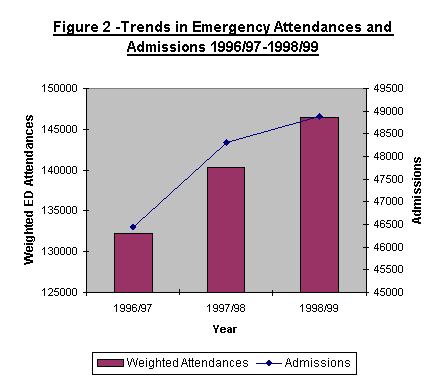
There has been a 10.7% increase in weighted ED attendances since 1996/97. This is important as EDs are a key entry point into the hospital system. Over the same period there has been a 5.3% increase in admissions from ED to hospital. This would suggest that some of this growth in attendances is appropriate as the patient has gone on to be admitted.
There are some variations across the Sectors. Weighted ED attendances have increased at Liverpool (17.3%), Bowral (22.1%) and Campbelltown (12.1%) with associated increases in admissions (Liverpool 15.1%; Bowral 28.4% and Campbelltown 7.8%). There has been reductions in both attendances and admissions at Camden (-5.1% and -11.1% respectively). Attendances have increased at Fairfield (3.4%) and Bankstown (7.4%) while admissions have decreased (-1.2% and -3.6% respectively).
Th variation in the Macarthur Sector is related to the changes in inpatient beds and decanting at Camden and therefore shifts of activity to Campbelltown.
Of total hospital admissions in 1997/98 and 1998/99, 37.9% and 38.5% were from the ED. As a statewide benchmark, generally about 33% of total admissions are from the ED.
Source: EDIS and HOSPAS
6.3 Waiting List Performance
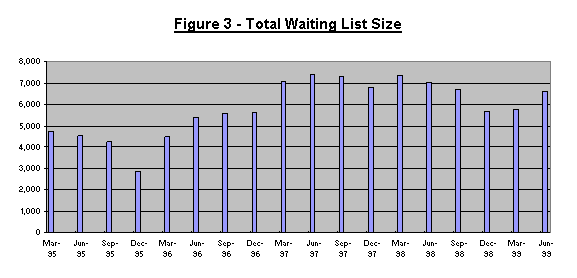
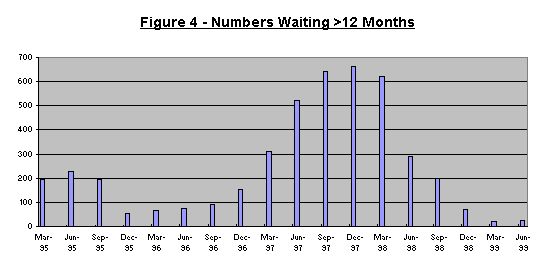
Monitoring of waiting lists commenced in March 1995. There are a number of targets in relation to waiting lists and there have been a number of strategies aimed at reducing the waiting time for patients, particularly for those waiting longer than 12 months.
7. Pattern of Utilisation of Services
7.1 Population Generated Activity
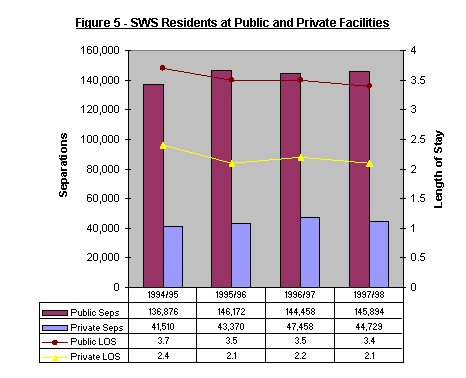
Figure 5 indicates the total utilisation of acute services by SWS residents over the period 1994/95 to 1997/98. This includes public and private sector activity, residents treated within SWSAHS and those treated outside SWSAHS. This shows:
- A 6% increase in public sector separations;
- A 7% increase in private sector separations;
- A 9% decrease in the average length of stay in the public sector;
- A 14% reduction in the average length of stay in the private sector.
7.2 Supply of Services
The current supply of acute services indicates the following:
- 1 in 4 SWS residents access care outside SWSAHS;
- There are low levels of self sufficiency for tertiary services although there has been an increase of nearly 10% from 37.6% in 1996/97 to 47.4% in 1997/98. This trend is expected to have continued in 1998/99;
- Generally high levels of self sufficiency (81.5% in 1997/98) for non tertiary overnight services;
- Moderate levels of self sufficiency (68.9%) for non tertiary same day services;
- Large variations in self sufficiency between service streams;
- An increase in the number of emergency department (ED) attendances and admissions from ED.
More detail is provided at Appendix D.
7.2.1 Outflows
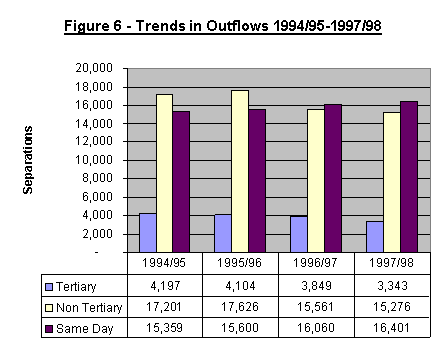
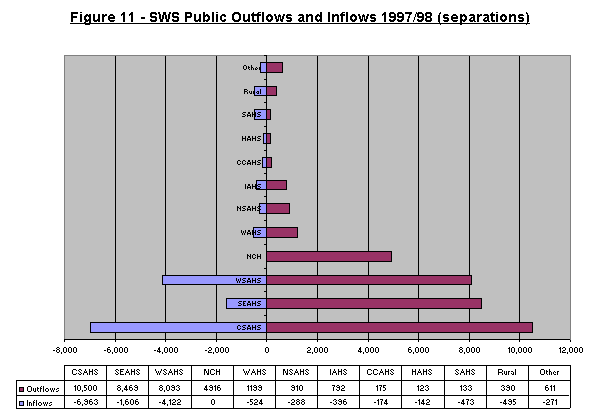
1 in 4 SWS residents access care outside SWSAHS. In 1997/98, more than 50% of SWS residents accessed tertiary services outside the Area Health Service. Figure 6 demonstrates the inflows and outflows in 1997/98. Central Sydney, South Eastern Sydney and Western Sydney Area Health Services and the new Children’s Hospital are the four main areas where SWS residents access care outside SWSAHS.
There has been a significant reduction in tertiary outflows since 1995/96 that is expected to have continued in 1998/99. Non tertiary overnight and same day outflows have remained basically the same or have slightly increased.
7.2.2 Sector Health Service Outflows
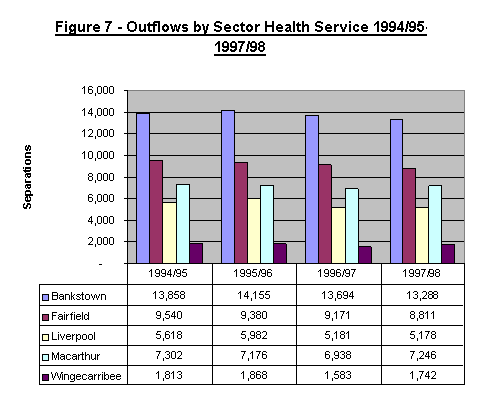
In regard to outflows by Sector Health Service, there have been slight reductions over the period 1994/95 to 1997/98. Bankstown Health Service is the main source of outflows from SWSAHS with 34% of all outflows from this Sector. This is followed by Fairfield and then Macarthur Sector Health Services.
7.2.3 Outflows by Service Related Group (SRG)
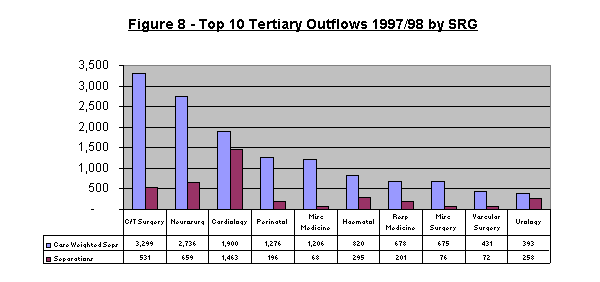
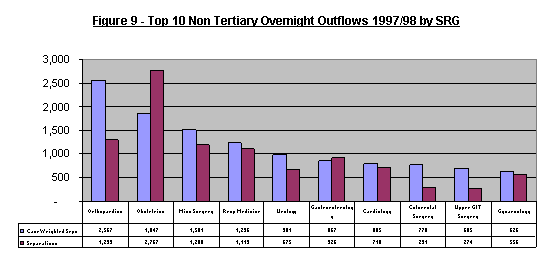
As indicated there are varying levels of outflows and self sufficiency by individual service stream. It should be noted that while there may be high outflows for some services, self sufficiency may in fact be high. For example, while Obstetrics is a high volume outflow, 88% of SWS residents receive obstetric care within SWSAHS.
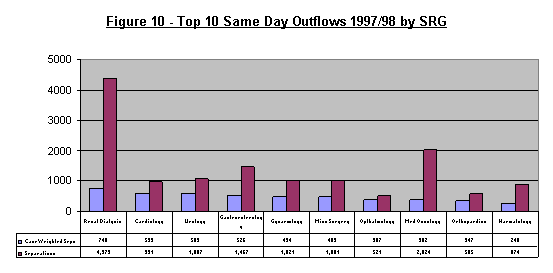
The top 10 tertiary outflows by SRG account for 85% of all tertiary outflows from SWSAHS. The top 10 non tertiary overnight outflows by SRG account for 66% of all non tertiary overnight outflows. The top 10 same day outflows account for 74% of all same day outflows. Figures 8-10 indicate these flows.
7.2.4 Inflows
In the years 1994/95 to 1997/98, there has been an 11% increase in inflows to SWSAHS. Reflecting the increased availability of higher level services within the Area, there has been an 18% increase in case-weighted separations. Central and Western Sydney Area Health Services are the main sources of inflow.
7.2.5 Summary of Outflows and Inflows
7.2.6 Net Flows
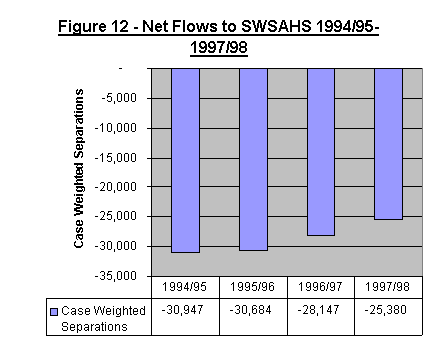
Net flows, that is the differential between outflows and inflows, is one of the indicators used to determine the Area’s budget. Over the period 1994/95 to 1997/98, there has been a reduction in net flows as outflows from SWSAHS have reduced and inflows have increased. However, overall the Area continues to have large net outflows.
8. Current Activity and Financial Position
In 1997/98 SWSAHS total activity grew 7.16% compared to 1996/97. This corresponded with an injection of funds to Liverpool and other sites. Flow reversal was evident in the clinical disciplines where services were developed or expanded, for example, cardiothoracic surgery. Tertiary self sufficiency increased by 10% from 37.6% in 1996/97 to 47.4% in 1997/98. Despite this, for some services outflows increased (for example, in orthopaedics) and equity worsened, with more patients having to travel outside SWSAHS for care.
Activity increased 2.73% in 1998/99. As much of this was driven by funding for the Priority Access Strategy, some of the growth has been aimed at lowering existing queues and creating better access. However, some flow reversal is anticipated.
8.1 Resource Distribution Formula (RDF)
SWSAHS has historically been under funded in relation to its RDF share of the available funds for health services. Currently SWSAHS has 96.1% of its 2001 funding share. This share excludes funding for SWS residents who receive care outside SWSAHS, that is, the share is based on existing flow patterns. If SWSAHS achieved its 2001 target share, this would be equivalent to an additional $18 million based on the current pool of funds which is available.
8.2 Flow Reversals
Activity currently occurring somewhere in the NSW health system is funded activity. If activity related to SWS residents can be reversed and managed within SWSAHS, then the estimated flow reversal that is considered achievable would deliver $47 million (at $2,300 per cost weighted separation) to SWSAHS by 2001.
The main Area Health Services affected by this flow reversal are Central, South Eastern and Western Sydney Area Health Services. It is estimated that the impact is in the order of $10-$15 million, although this is being reviewed as part of a more detailed flow analysis.
8.3 Program Allocations
SWSAHS Program Shares have changed over the period 1995/96 to 1999/00 as shown in Figure 13. There have been significant budget enhancements since 1995/96 for a wide range of services including the development of new services at Liverpool, Wollondilly and Rosemeadow Community Health Services, a range of mental health Initiatives, community based services and waiting list reduction.
This has been equivalent to:
1995/96 $22.8 million
1996/97 $27.2 million
1997/98 $50.1 million
1998/99 $5.6 million
1999/00 $1.8 million
Total $107.5 million
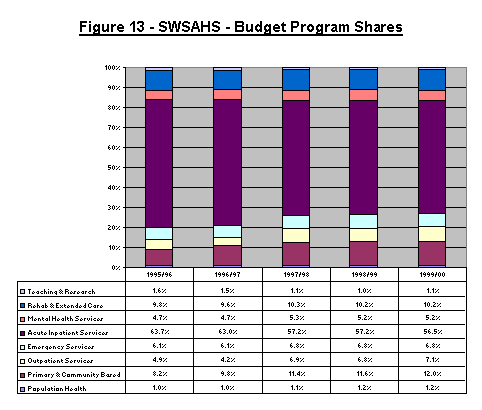
An increasing percentage of the budget is being directed to Primary and Community Based, Outpatient and Rehabilitation and Extended Care services.
The total SWSAHS budget has also increased by 31% over the period 1995/96 to 1999/00. The Government subsidy by Program is shown in Table 7.
Table 7 – Government Subsidy by Program
| Program | 1995/96 $,000 |
1996/97 $’000 |
1997/98 $’000 |
1998/99 $’000 |
1999/00 $’000 |
| Population Health | 3,405 |
3,517 |
4,690 |
5,276 |
5,396 |
| Primary and Community Based | 27,580 |
35,113 |
47,678 |
51,000 |
53,088 |
| Outpatient Services | 16,521 |
15,016 |
28,927 |
29,897 |
31,315 |
| Emergency Services | 20,702 |
21,872 |
28,769 |
29,896 |
29,939 |
| Acute Inpatient Services | 214,809 |
224,773 |
240,241 |
251,483 |
249,576 |
| Mental Health Services | 15,779 |
16,919 |
22,131 |
22,862 |
22,895 |
| Rehabilitation and Extended Care | 33,042 |
34,410 |
43,193 |
44,845 |
45,066 |
| Teaching and Research | 5,327 |
5,397 |
4,416 |
4,397 |
4,754 |
| Total: | $337,165 |
$357,017 |
$420,045 |
$439,656 |
$442,029 |
Source: SWSAHS Finance Department
This has enabled SWSAHS to both increase overall activity as well as make progress in treating more SWS residents locally, thus reversing outflows.
9. Strengths and Weaknesses of Current Position
SWSAHS has an enviable record in the development of innovative service models and clinical practice. Whilst to date some of this innovation has been driven by resource constraints, given the patient and clinician benefit which has resulted, this should continue to be promoted and supported.
SWSAHS has also achieved overall efficient provision of services, although there is still room for some improvement. SWSAHS has demonstrated the ability to both respond to increasing demand for services from residents, as well as reversing outflows.
When the Macarthur Strategy is completed, the overall condition of SWSAHS’s physical assets will be good. It is acknowledged that there is a need for further work at Liverpool and Bowral in particular, but the base for future modification of assets to meet service needs is strong.
There has also been a rapid expansion in the number of staff within the Area. This provides a significant opportunity to further develop and enhance the skills of people to achieve and respond to changes in health service provision. There has also been significant progress in relation to research recently with the establishment of the Ingham Research Institute and Simpson Centre.
A weakness of our current position is the inequity in access to services, as well as skilled staff. It is a major objective to ensure that SWS residents have equitable access to the health services they require.
It is also difficult to determine the effectiveness of our current services. This is important in making decisions about the relative allocation of funding between programs and within programs, and ultimately to individual service streams.
Resource constraints are likely to continue and will mean that SWSAHS will need to look to its own resources in the first instance to develop and enhance services that are considered a priority.
10. Summary of Key Indicators of Current Situation
Table 8 summarises the current performance of SWSAHS in relation to a number of key indicators.
Table 8 - Summary of Key Indicators of Current Situation
| Indicator | Measure |
| Beds Available | 1,470 beds |
| Bed capacity potentially available | 536 beds |
| % of same day activity as proportion of total admissions | 34.9% |
| % of same day surgery as proportion of surgery | 42.3% |
Acute self sufficiency in
1997/98
|
75% 47.4% 81.5% 68.9% |
Average length of stay in
SWSAHS in 1997/98
|
11.5 days 4.4 days |
| ED admissions as a % of total admissions | 37.9% in 1997/98 and 38.5% in 1998/99 |
| Hospital admissions per FTE | 29.3 in 1998/99 |
| Average cost per NIOOS (1997/98) | $81 |
| Average per cost weighted separation | $2,099 |