Mid-Western Brain Injury Program
Bathurst
Rehabilitation Program
Eric Sargeant Drive
BATHURST NSW 2795
: denise.young@gwahs.health.nsw.gov.au
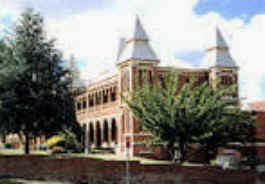
Mid-Western Brain Injury Program
|
|
| *
Mid Western Brain Injury
Rehabilitation Program Eric Sargeant Drive BATHURST NSW 2795 : denise.young@gwahs.health.nsw.gov.au |
|
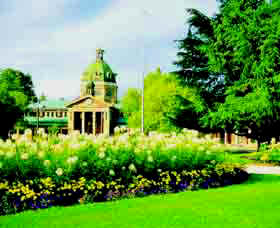
| Bathurst Base Hospital | |
Information About the Social Work Position |
SERVICE SETTING
|
| · Mid Western Brain Injury Rehabilitation Program is one of two
brain injury rehabilitation programs operating within the Greater Western Area Health Service of NSW. The area covered by Greater Western Area Health Service is 55% of NSW (an area larger than Germany). The second Brain Injury Rehabilitation Program is based at Lourdes Hospital in Dubbo. It services the part of Greater Western Area Health Service formerly covered by Macquarie Area Health Service. A Brain Injury Rehabilitation Program does not cover the most remote parts of the area at present. |
| ·
Mid Western Brain Injury Rehabilitation Program covers the local
government areas of Greater Lithgow (not part of Greater Western Area Health Service), Oberon, Bathurst Region, Blayney, Cabonne, Orange, Cowra, Parkes, Forbes, Lachlan, Weddin and those parts of Mudgee Region that were formerly in Rylstone Shire. |
| ·
The population younger than 65 years of age in the area serviced
by Mid Western Brain Injury Rehabilitation Program was projected to be approximately 168,000 in 2006. |
 |
| The Unit |
| ·
Mid Western Brain Injury Rehabilitation Program services are
provided on an outreach basis to people living in all the
above local government areas as required. |
| ·
Mid Western Brain Injury Rehabilitation Program offices are
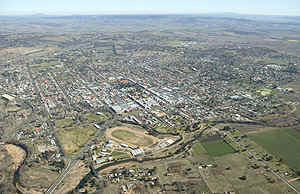
located in Bathurst (the second largest town in the area
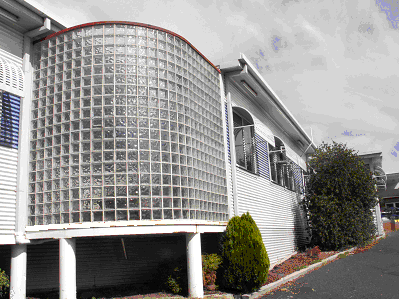
serviced). The offices are co-located with other services of Bathurst Health Service – the rehabilitation ward, the physiotherapy, speech therapy and occupational therapy departments, the Mid Western continence adviser and community health centre. This complex is four kilometres from the main campus of Bathurst Base Hospital. |
|
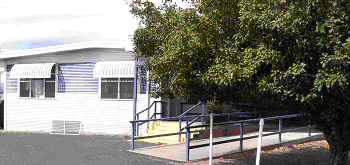
· The house used for transitional living programs is located in a
residential area of Bathurst, four kilometres away from the Brain Injury
Rehabilitation Program offices. |
| ·
Mid Western Brain Injury Rehabilitation Program will be moving
into new offices in 2008 in the redeveloped complex for Bathurst Health Service, which will see all Bathurst health services on one campus (excluding transitional living unit). |
| ·
Mid Western Brain Injury Rehabilitation Program has a full time
equivalent (FTE) staff establishment of 8.2, comprising:- program manager, social worker, senior occupational therapist, senior psychologist, speech pathologist, occupational therapist (each of these positions has the role of rehabilitation co-ordinator as well as their discipline or management responsibilities), secretary, paediatric rehabilitation co-ordinator (0.5 FTE), rehabilitation assistant (0.736 FTE casual pool). The services of a rehabilitation specialist are purchased for approximately 1.5 days a fortnight and those of a neuropsychologist for approximately one day a month. Physiotherapy is provided through generic health services across the region. |
| · Clients of Mid Western Brain Injury Rehabilitation Program –
generally 105 clients each year (primary aged children and adults of working age). Traumatic brain injury and people with sudden onset acquired brain injury with similar effects to traumatic brain injury. |
2004 – 2005
|
|
Number of adult clients |
99 |
|
Number of paediatric clients |
13 |
|
Episodes of care during 2004-2005 |
125 (adults – 112; paediatric – 13) |
|
Age of Clients |
|
|
0-16
years |
11% |
|
17-34
years |
37% |
|
35-54
years |
37% |
|
55-70
years |
15% |
|
Male clients |
64% |
|
Cause due to road trauma |
50% |
|
Cause due to other trauma |
15% |
|
Cause due to non-traumatic means |
34% |
|
Compensible |
|
Adults |
22% |
|
Children |
54% |
|
Non-Compensible |
|
Adults |
78% |
|
Children |
46% |
| ·
Case management model is used – each adult rehabilitation co-ordinator takes responsibility for a geographic area; the paediatric co-ordinator works with children across the region.
· Community rehabilitation programs.
|
 |
| · Transitional living programs in client’s own home or in a
house in a residential part of Bathurst. |
|
| ·
Some specialist therapy and co-ordination of rehabilitation
programs for people with acquired brain injury who spend a period as inpatients of the Rehabilitation Unit of Bathurst Base Hospital. |
|
|
· Specialist discipline-specific intervention as identified goals
require. |
 |
| ·
Education about brain injury to clients, families, service
providers, etc. |
|
|
· Assistance to clients to understand and adjust to any residual
disability. |
|
· Assistance to family members of clients – education, support and help to adjust to changes associated with residual disability of a person with an acquired brain injury. |
|
| · Advice and consultancy to other service providers. |
|
| ·
Ensuring appropriate services are established or enhanced to meet
the needs of people with brain injuries. |
|
| ·
For some assessments and services people need to travel to
Bathurst or to the nearest large town to their homes, however, community rehabilitation programs are usually developed taking into consideration the resources in their local communities. |
|
ROLE OF THE SOCIAL WORKER
|
| ·
Initial assessment of rehabilitation needs/co-ordination of
rehabilitation programs for inpatients and community-based clients, often assist in the co-ordination of transitional living programs. Social worker has responsibility for the area encompassing Blayney/Cowra/Grenfell and shares management of clients in Bathurst and Orange with all other case managers/rehabilitation co-ordinators. The social worker usually manages people in these towns that require social worker’s particular skills (adult clients only). |
| ·
Social work assessments of clients, as required. |
| ·
Some supportive counselling of adult clients with issues
associated with anxiety, depression, loss and adjustment to disability (although the psychologist does cognitive behavioural therapy when required). |
| ·
Some counselling of family members of adults around issues
associated with adjusting to the disability/changes for their adult family member. |
| ·
Establish/facilitate task oriented, educative or support groups
for clients and/or significant others. |
| ·
Be responsible for the facilitation of community development
activities within the service. |
| ·
Be responsible for the ongoing development of case management
practice within the service. |
| ·
Act as a consultant to other members of the Mid Western Brain
Injury Rehabilitation Program team on welfare matters (income, housing, legal and guardianship) and community resources – maintain information about these. |
CURRENT ISSUES FOR THE SOCIAL WORKER |
|
·
The lack of accommodation support – particularly for people with
high support needs. |
| ·
Nursing homes are not a good option – both because of the
intrinsic nature of nursing homes and because the ACATs are being discouraged from recommending nursing home placements for young people with disabilities. |
| ·
The lack of other services to help people with disabilities
arising from a brain injury achieve a worthwhile quality of life. |
| ·
A complete lack of concern by funders that there is a huge level
of unmet need in the community for services to support people with brain injuries. |
| ·
The lack of employment opportunities for the more able people
following a brain injury. |
| ·
Difficulty helping friendship and social networks to survive a
person’s lengthy hospitalisation or changed abilities or difficulty establishing new friendship or social networks. |
| ·
Struggle to juggle the needs of both the client (the person with a
brain injury) and the family members when both are very complex. |
| ·
Addressing times of transition – child to adult; rehabilitation
to community living. |
| ·
Short-term difficulty juggling my own position with that of acting
as program manager (even though this is being shared with another team member). |
| · Trying to maintain enthusiasm and creativity after 13 years in the position. |
RECENT INTERESTING PROJECTS |
| ·
Running a small number of part-day, one-off activities workshops
for people with brain injuries, e.g. grow a salad in a box, growing a cactus garden, painting and drawing, hand-built pottery. |
| ·
Involvement in the research project for developing a family
outcome assessment tool. |
| ·
Involvement in submitting an application to the Greater
Metropolitan Clinical Service Taskforce (GMCT) for funds to investigate appropriate models of service for remote areas. |
Last modified: Monday, 25 September 2006 25th September 2006