|
*
Hunter New England Area Health Service |
 |
| Brain Injury
Service |
| PO Box 337
The Junction |
| NSW 2291 |
|
((02)
4929 3100 |
|
Ê(02)
4939 4504 |
| |
| |
| |
|
The Hunter facility |
| |
|
Hunter Brain Injury Service (HBIS) is one of the
units of Hunter Rehabilitation Disability Service, which also includes
the Spinal Cord Injury Service, Hunter Prosthetics and Orthotic Service,
Driver Assessment & Training Service, and the Hydrotherapy Pool and
Gymnasium Services.
|
HBIS operates within the Southern Sector of Hunter New
England Area Health Service, which is one of four rural
health services in New South Wales, but the only one with a metropolis
within its borders. The Southern Sector includes
the Hunter Valley and Lower Mid North Coast geographic areas.
The Service also covers the Central Coast area of Northern Sydney
Central Coast Area Health Service. The main
facility is located in the community at Bar Beach
(a suburb of Newcastle), which is 9kms from John Hunter Hospital,
the Level 1 Trauma Centre for Northern New South Wales.
There is also an Outreach office located at Taree
where 2 staff are based.
|
|
Hunter Brain Injury Service covers the local
government areas
of Newcastle, Lake Macquarie, Port Stephens, Greater Taree, Great Lakes,
Singleton, Scone, Gloucester, Maitland, Merriwa, Muswellbrook, Wyong and
Gosford. These areas have a combined population of approximately
918,000 people. The primary target group is working aged people who
have sustained a traumatic brain injury. People with acquired brain
injury are
offered a 12 week block of therapy and case management, with referral
then to community services.
|
 |
|
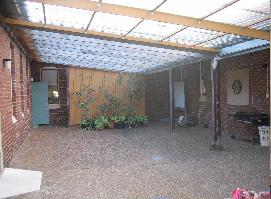
Enclosed courtyard |
|
Three different streams of rehabilitation are provided by Hunter Brain
Injury Service. These are:
|
|
·
Transitional Living Unit – a residential program with
accommodation for up to five clients. It operates Monday to Friday with
clients spending their weekends at home. This is located at Bar Beach.
·
Outpatient Service – this stream allows clients to live at
home whilst still attending the Brain Injury Service for therapy
appointments. This service is also located at Bar Beach.
·
Outreach – this stream is involved with clients who are
living in the community and not involved in the other streams but who
still require some therapeutic input at home and/or linkages to local
disability and mainstream services. This includes exploring lifestyle
and leisure options with clients in mainstream activities where
possible. Both Bar Beach and Taree offices provide an outreach
service.
|
|
Clients are able to move across the streams. For
example, an Outreach client may require a short TLU admission in order
to assess his capacity to move out of home to independent living, or
another client may come to TLU straight from hospital, then move to
Outpatient and later Outreach services as his abilities and needs
change.
|
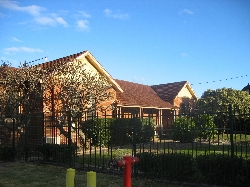
The Hunter Brain Injury Service facility at Bar Beach has recently
undergone a $800,000 extension and refurbishment which has expanded
office space and treatment areas incorporating a workshop
|
|
From January to December 2005 there were 33 new
adult admissions to the TLU and 140 new adult admissions to community
streams.
|
SERVICES PROVIDED BY HUNTER BRAIN INJURY SERVICE
|
-
The Hunter Brain
Injury Service operates as a transdisciplinary team with close
liaison between therapists and rehabilitation assistants, as well as
other staff.
|
-
A case
management model of client management is used with all allied health
staff providing both assessment and therapy, as well as case
management. Clients are allocated according to priority and staff
workload.
|
-
Case management
includes development of the rehabilitation plans with the client
and/or insurer, liaison with medical staff, therapists and
significant others, arranging transport, organising feedback
meetings, oversight of day-to day issues in the TLU, liaison with
return to work providers, co-ordination of appointments.
|
-
HBIS does not
provide long term case management and only case manages those
clients who are actively involved in a rehabilitation program
|
|
 |
-
Specialist
therapy by all Allied Health disciplines.
|
-
Education and
consultation to families, schools, service providers, carer’s
groups, public and private hospitals. return to work providers etc.
|
-
Short TLU
admission for assessment of young people in nursing homes, hostels
or boarding houses who have the potential to move to community
accommodation
|
-
Close ties are
maintained with Hunter Brain Injury Respite Options, Headstart
Community Access Programme and Hunter Brain Injury Group
|
|
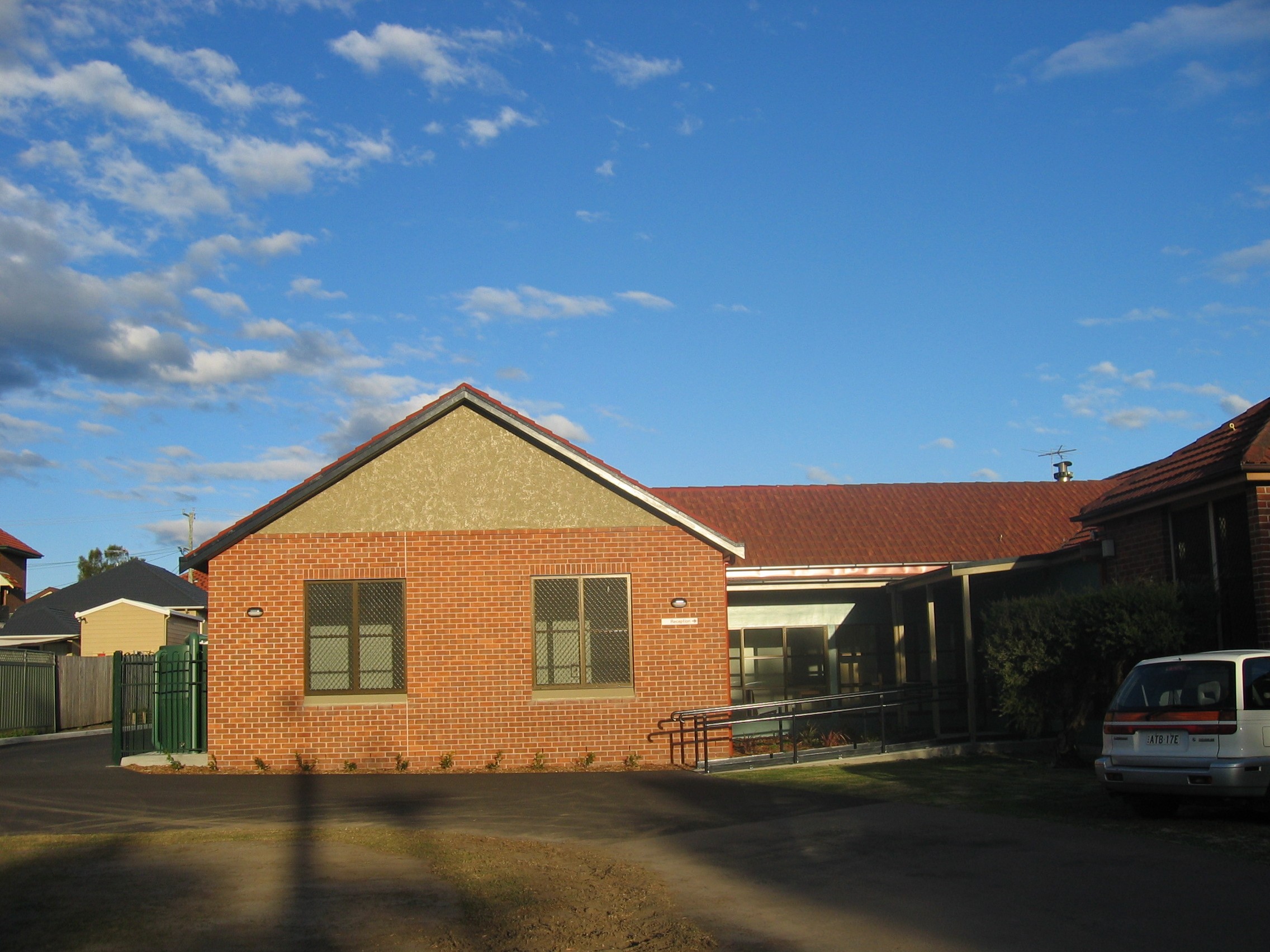
Outside view |
|
ROLE OF THE SOCIAL WORKERS
|
-
Initial
assessments (along with other team members depending on allocation)
|
 |
-
Comprehensive
psychosocial assessments which include support networks, lifestyle
issues, finances, accommodation, work/education history, AOD
assessment, mental health screen for depression,
anxiety and stress disorders,
sexuality issues,
preinjury issues such
as previous criminal justice involvement.
|
-
Counselling for
significant others in relation to the brain injury and adjustment
issues
|
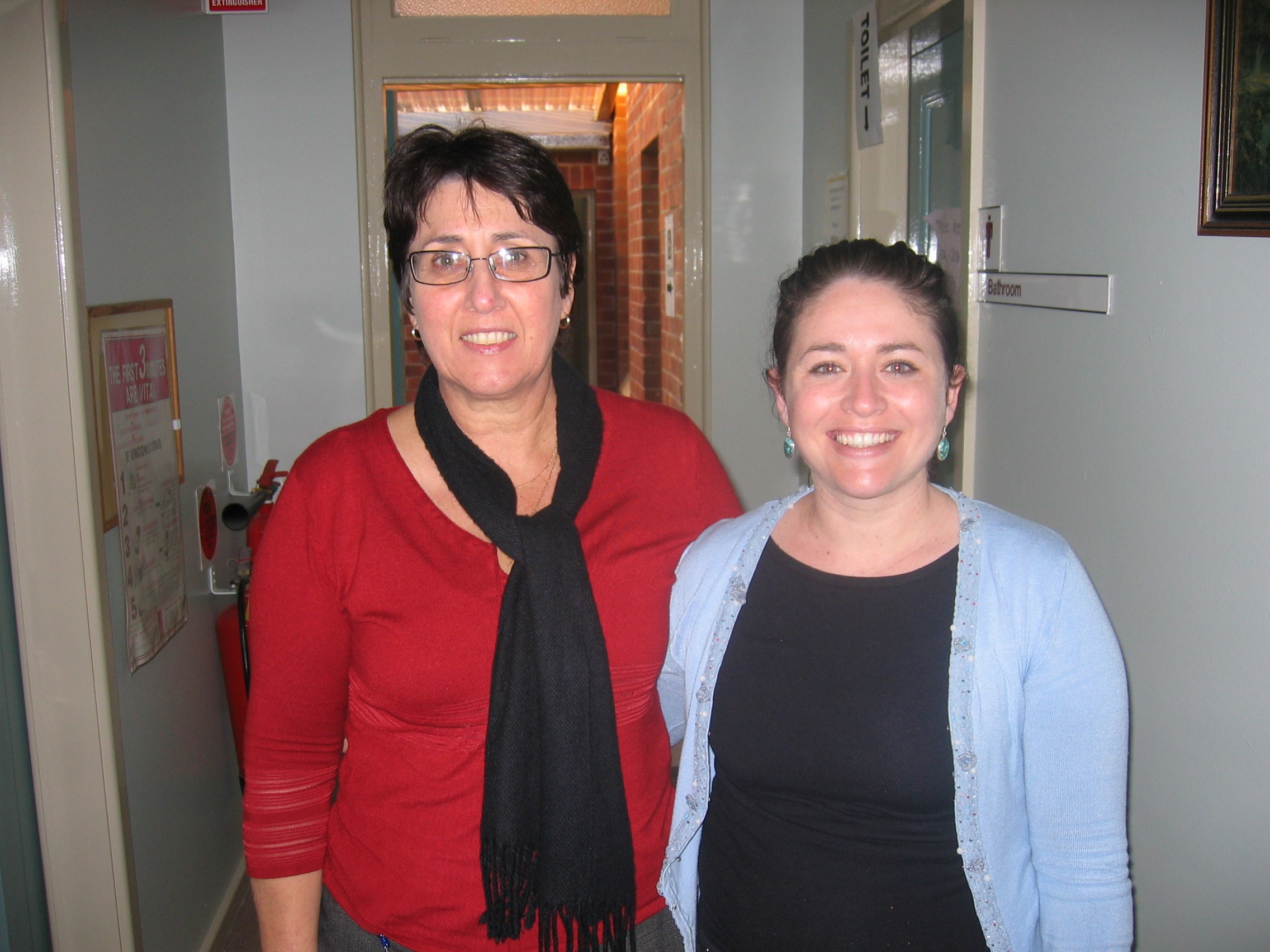
Bron and Judy
|
-
AOD counselling
while clients are in the TLU, then referral on to AOD specific
services.
|
-
Education to
significant others and other services
|
-
Community
development activities
|
- Member
of the Committee of Management of the Hunter Brain Injury Respite
Options Service (funded
by Dept of Disability Ageing & Home Care)
|
-
Attend the
Transition Meeting with children’s brain injury team
|
-
In conjunction
with other team members establish links with other relevant
organisations e.g. indigenous medical services, Disability Advocacy
Service, Probation and Parole Service, Victims of Crime
organisations
|
-
Applications for
Guardianship and/or Financial Management
|
-
Liaison with
Government and non-Government services re income maintenance,
financial matters, legal issues, accommodation, family support,
child protection, long term case management providers etc
|
|
|
 |
|
|
|
|
CURRENT ISSUES FOR SOCIAL WORK IN THE HUNTER
|
|
·
Lack
of supported accommodation for young people with a brain injury
|
|
·
There
are a number of young people in nursing homes in the Hunter area and
Social Workers have been linking these to the Young People in Nursing
Home Project
|
|
·
Establishing closer links with the Indigenous Services
|
|
·
Tyranny of distance – experienced by most rural services in maintaining
adequate therapy and other services when people return to the rural
areas.
|
|
·
Long-term case management – some services have an aged care focus which
has limited our clients’ access to long term case management
|
|
·
Respite – some respite services limited to the aged which limits access
for families
|
|
·
Public
Housing – early stage liaison and planning re how best to manage brain
injury clients who are often located in disability complexes where most
of the other residents are aged
|