The Nottingham Traumatic Brain Injury Service |
| * Mobility Centre |
|
| City Hospital NHS Trust | |
| Hucknall Road | |
| Nottingham | |
| Nottinghamshire | |
| NG5 1PJ | |
| ( + 0115 9691169 | |
| Ê + 0115 9934904 |
|
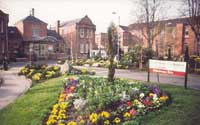
View of Nottingham |
The Nottingham Traumatic Brain Injury Service |
|
|
The Nottingham Traumatic Brain
Injury Service (NTBIS) was set up in 1992 as part of the ‘Warwick
Study’, in which Central Government funded twelve brain injury rehab
services for a five year period, with the aim of determining the best
service model. |
|
| At the end of the study, funding was picked up
locally by the Health Service, which continues today. |
|
| The team consists of 2.5 FTE Case Manager, 0.6
FTE Outreach OT, 0.5 FTE Clinical Neuropsychologist, 1 FTE Cognitive
Behavioural Therapist, 0.5 Team Manager (who does not have a clinical
role), and 0.5 FTE Admin support. |
|
|
We are located at the
City Hospital, Nottingham, although |
|
|
|
|
The Social Worker in the team |
|
| The two local Social Services
Departments (SSD) provide 18.5 hours funding between them for a Social
Worker to be employed as a Case Manager in the team (CM (SW)). (An extra
8 hours funding is added to this by the NTBIS itself). The CM (SW)
carries out the same job and functions as the other two Case Mangers in
the team (one of whom is from a nursing background, the other from OT),
and thus does not perform as a Social Worker as such., but rather
co-ordinates rehab and commissions social care packages from the
relevant SSD. |
|
|
|
The CM (SW) does not have direct access to local
SSD budgets for care packages etc, so clients requiring these need to be
allocated a local SW, who will complete assessments alongside the NTBIS.
This has a benefit of ‘training up’ local SWs in brain injury and
sequaelae. On the other hand, it is difficult to ‘fit’ the problems
which survivors of brain injury encounter and endure into SSD assessment
proformas, and thereby ensure that they score enough ‘points’ for
service eligibility, (see below). |
| In addition to carrying a caseload
the CM (SW) has a development role. The NTBIS as a whole has a
development brief which includes carer training, running a Brain Injury
Special Interest Group, advice and support to professionals working in
generic roles, encouraging existing, more generic, services to provide
for TBI survivors. On coming into post the CM (SW) found that the post’s
development brief was ill-defined, and has had, therefore, to be itself
developed over time |
|
What the Case Manager (Social Worker) brings to the service |
|
Casework |
|
| The majority of social workers are
caseworkers first and foremost. The present CM (SW) has found it
particularly useful to have worked with a wide range of client groups,
as TBI can affect anyone and has wide-ranging consequences. Thus a
background in child protection, mental health and adult care has proved
invaluable. |
|
Family/Carer support |
|
| Arguably a TBI Case Manager will
spend significantly more time with the family or carers of the brain
injury survivor than with the survivor him/herself. The catastrophic
injury of TBI, unsurprisingly, often throws families into chaos and
confusion requiring skilled support and intervention to enable them to
be able to function and, in turn, care for the person who has been
brain-injured. Social workers are specifically trained in crisis
management, the understanding of family structures and the impact of
disability. |
|
Loss and bereavement |
|
| Closely linked to this are the issues
of loss and bereavement. NTBIS Case Managers do not, themselves,
provide structured counselling sessions to help families and survivors
come to terms with loss, but will instead refer on. However, a clear
understanding of the issues involved in change and loss is essential to
ensure compassionate, effective and timely casework. Again, this is an
area in which social workers have specific training and skills. |
|
|
|
|
|
|
|
Specifically, the CM (SW) can, and does, act as a link between the NTBIS
and the SSDs. Thus it has been possible to promote effective
caseworking partnerships between case manager and Social Work
colleagues, to brief social workers on the function and role of the
NTBIS and vice versa. This kind of liaison, carried out both formally
and informally, has proved very useful and is increasingly relevant in
the climate of closer joint working and co-operation between the
agencies. |
|
| Despite the recommendations of the
Select Committee on Health Third Report[1][2]
and those of the SSI, Social Services Departments nationally have been
slow to create a specific client category for brain injury. This has
made it difficult for Social Workers to gain specific expertise in the
field and for resources to be tailored effectively. |
|
| The CM (SW) is now involved in
liaison and negotiation with local SSD senior management, for example
about improving the care pathways for NTBIS survivors, supporting SSD
contracting and commissioning services, ‘flying the flag’ for TBI rehab.
|
|
| The CM (SW) also played an important
part (along with some County SW colleagues), in revising the SSD
Extended Assessment form, particularly the eligibility criteria, thus
helping to ensure that those who are brain-injured receive an equitable
service from Social Services. This is particularly important, as brain
injury is a “hidden” disability, its consequences can be subtle, though
acute, and may be missed or given insufficient weight by inexperienced
workers. The revised Extended Assessment form gives cues and advice to
assessors. |
|
| The CM (SW) also sees it as his
responsibility to keep appraised of policy developments nationally and
within the Local Authorities. There are particular initiatives that
have, or will have, relevance to NTBIS clients, for example Protection
of Vulnerable Adults policies, Direct Payments, Supporting People and
the Single Assessment Process. The CM (SW) should take the lead in
advising on and implementing these, where appropriate, within the NTBIS.
For example recently, a severely disabled brain-injured man began paying
for his care using Direct Payments. This was a result of the CM (SW)
being part of a working group on Direct Payments with colleagues in
learning disabilities. Information learned there was shared with the
client's social worker and, with the additional support of the City
Independent Living Team, the client was able to fulfil choices about
carers and fund them directly. |
|
Training |
|
|
The CM (SW) has had teaching input to
the DipSW course at the University of Nottingham, presenting a session
on brain injury for final year social work students. |
|
|
|
 |
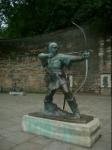
| Nottingham Shopping Exchange | Castle |
[1] Select Committee on Health Third Report 28th March 2001 |
|
| [2]Ibid. Summary of Conclusions and Recommendations xvii, xxiv | |
| Last modified: Monday, 25 September 2006 25th September 2006Monday, 25 September 2006 |
|