FINDING YOUR VOICE
by Allan Tegg
Vicarious traumatisation is often
an issue for professionals working with torture and trauma survivors.
STARTTS’ staff working with Kosovar refugees as part of Operation
Safe Haven last year were constantly exposed to immense personal
tragedies and the rawest human emotions.
ALLAN TEGG reports on the writing workshops he held for these
staff members, helping them make sense of their experiences and
keeping their own symptoms of vicarous traumatisation at bay.
I cry, unable to stop. No one hears.
My pillow - wet on my face. The thumping in my ears. Sleep. I
wake. Sobbing. Sweating. Images flash before me. The soldiers.
The dogs. Guns. Bodies. Blood.
The above paragraph begins a story by Holly Byron, Psychologist
and Counsellor. Holly wrote the story during a writing workshop
for STARTTS’ staff who had been involved with the Operation
Safe Haven project. The project brought Kosovar and East Timorees
refugees to Australia for short term stays during the conflicts
in their respective countries.
“The writing workshops were the best debriefing I’ve
ever experienced,” says Peter Davis, Team Leader of the STARTTS
Counselling Services during the Safe Haven project. “The
workshop really helped my psychological well being. It helped
me understand the intensity of the whole experience.”
The workshops evolved out of the fortnightly debriefing sessions
that Rise Becker, a Clinical Psychologist working with STARTTS,
was providing for the Safe Haven workers. “The experience
in the Safe Haven was so difficult and confusing that those involved
wanted something concrete, something they could hold onto. The
idea for the writing workshop came out of these meetings,”
Becker says. A series of three writing workshops were then set
up for these workers.
“We thought it might be a novel way of addressing secondary
traumatisation,” Becker says. She explains that secondary,
or vicarious, traumatisation is often experienced by helpers as
they work with people who have been through horrific events: “The
work can leave the practitioner feeling confused and hopeless.”
There is no doubt that STARTTS’ staff were deeply affected
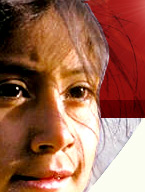
by their experience of working with the refugees. Holly Byron’s
story, written from the perspective of a young Kosova girl, recounts
the girl’s experience of being trapped in the toilet of the
QANTAS plane on the way to Australia and the therapeutic assistance
she received from Byron. The girl, suffering from post traumatic
stress disorder, relived the horrors of Kosovo as the QANTAS staff
tried to free her.
A strange man is there. He’s not my father! He’s a Serb
[soldier]. The soldiers have got me. Run. Hide. Live. Survive.
I can’t get out. I can’t move back. Trapped in that
tiny toilet. I struggle with the man. He slaps my face. I tear
at his arm as I desperately try to run to safety. He grabs at
my sweat shirt. I duck down the aisle. But there is no peace to
be found. A sea of hands try to grab me.
New writers often have a strong inner censor which inhibit their
efforts. The workshop consisted of a number of exercises designed
to help the participants to write freely. Invariably the participants
were surprised by the power of the images they developed.
This discovery not only increased their confidence as writers,
but also helped with the debriefing. As Peter Davis puts it, “[When
you’re writing] you have a time to reflect uninterrupted.
Then when the stories are read to the group, people are touched
and moved. It helps to heal people as they relate what they have
gone through.”
Davis says that the structure of reflective time when writing
followed by reading one’s work to the group is particularly
good for people who find it difficult to speak in groups. He is
correct. When someone is reading their story no one interrupts.
Byron helped her little patient by letting her symbolically wreck
the toilet she had been trapped in.
Can I?” Disbelief rings in my ears as Holly suggests that
I jump on the box. Destroy the toilet. She reassures me and I
leap, kick and rip it apart. We destroy that toilet…Holly
encourages me, “That’s the way. You can do it. You’re
safe here with me.” I pound the box. Pleasure and pain flash
across my face.
I first met the participants in a pre-workshop interview at East
Hills, the site of Operation Safe Haven in New South wales. They
told me they would not be able to write because there were so
many stories they wouldn’t know where to start. In a sense
they were overwhelmed by their experiences. The workshop helped
them to tell one story at a time; to look at this story in detail
and begin to understand its affect on them. They then started
to gain some control over their experiences and their stories.
Jasmina Bajraktarevic-Haywood, Community Services Co-ordinator
at STARTTS, also attended the workshops. She uses narrative therapy
techniques in her counselling work and says the workshops had
a narrative therapy feel to them. “People focus on stressing
events,” says Bajraktarevic. “But it is important that
people see this as only one chapter of the story, not the whole
book.”
Bajraktarevic’s thoughts apply to the STARTTS’ personnel.
As the stories were written and read there was a greater ownership
of what had been achieved, along with an airing of the pain and
frustration they had suffered.
“I would love to see this method used a lot more in our profession,”
says Davis.
ILLUMINATING THE HUMAN ASPECT
Lachlan Murdoch, the Deputy Director of STARTTS, attended another
set of workshops for staff whose close association with the Safe
Haven project had finished some time previously. “The workshops
helped to take us back to that time. To look at what the time
was really like,” he says. Much of Murdoch’s involvement
with the Safe Haven project centred on the mechanics of providing
a good service. “The workshops helped me reconnect my focus
on the people I was working with,” he says.
Murdoch’s story is:
Streams of people emerged from buses to make their way to the
processing centre.
‘Mir se ne vini’ was all I could muster as the flow
of people became a torrent.
A young man slowed to respond. ‘Me vien mir,’ he replied
As our conversation continued wave after wave of people brushed
by as if we were clinging to an island in the middle of this stream.
Suddenly an official approached and directed my conversation partner
to the processing centre.
‘We are talking!’ I protested. And then hurriedly explained
that STARTTS was a counselling service that talked to people.
The officer was visibly displeased, ‘Everyone must be processed
immediately and he is gumming up the works.’
‘Give him a few more minutes and he’ll join the rest,’
I replied.
The officer moved onto the next group of dawdlers.
The young man’s girlfriend joined us. In the poor light it
was difficult to make out who I was meeting. They were both happy
to have come this far safely and could now stand and enjoy a cigarette.
We bid farewell and they joined the throngs now spilling out of
the processing centre.
Three days later a story appeared on the late news that the couple
were to marry. She had accepted his proposal made with a rose
picked from the East Hills remembrance garden.
RECORDING HISTORY
Murdoch says that the writing workshops have provided the organisation
with excellent material to include in forthcoming publications.
STARTTS are considering various ideas for publications regarding
the Safe Haven project. A possibility would be a document that
includes theoretical papers and reports on the work that STARTTS
undertook.
The pieces from the writing workshops could be used to spotlight
the type of things that happened, says Murdoch. “[The writing
shows] what it was like for STARTTS staff. It will illuminate
things, give [the publication] a flavour,” he says.
PERSONAL WRITING
Bajraktarevic-Hayward says that the workshops helped her to learn
basic tools for writing. Originally from Bosnia, she says: ‘I
knew I could write in my own language. I could also write academic
[papers] in English. But to find that I could write fiction and
poetry in English!’
Bajraktarevic-Hayward has been working with refugees since she
was 20. She says: “I now see that I could write a story about
the great and horrible things I’ve seen.”
WORKERS’ VOICE
One of the most exiting aspects of the writing groups is that
they give the workers a voice. I worked for a long time in Aboriginal
Affairs and it became obvious that there were increasing outlets
for Aborigines to tell their stories; that governments and the
various organisations - church, Aboriginal, non-government - could
use press releases and reports to publicise their points of view;
and academics could write books and speak at conferences. The
people with the least outlets for story telling where the people
who actually did the hands on tasks - community advisers, teachers,
clinic sisters, shopkeepers, mechanics, policemen. This not only
meant that there was a huge gap in the general discourse on Aboriginal
affairs. It was a concrete expression of the general belief that
the workers have the least to contribute. The following story
is by Peter Davis.
BETRAYAL
They huddled in terror as the dry grass pierced their shaking
bodies.
‘Daddy! Daddy! They’re going to shoot us,’ screamed
Ardon, trying to cover his tear stained face with his arms. ‘Daddy
where are you?’
The eyes of his brothers grew large as the media helicopters swooped
down like monsters with ominous intent.
The hot dusty wind was stirred up by the deafening noise of the
rotor blades, The four brothers were frozen in panic. Thoughts
flashed through their minds. Confusion. Blood. Dead bodies. Smoke.
Sickly smells. Screams. People running.
In a moment there were an army of police. Linked arm in arm, they
advanced through the frightened faces. Dogs growled and pulled
at their chains. More police arrived.
People ran, shouted , fell over.
‘Daddy! Help! Help! We’re going to die!’
Ardon was barely eleven years old. He bravely attempted to shield
his three younger brothers with his embrace. His desperate act
seemed futile as they clung quivering together, almost unable
to breathe.
A yellow sign caught Ardon’s eye. He could barely read Albanian
but he understood the simple words, ‘Welcome to East Hills
Safe Haven.’
‘They said we would be safe! I don’t understand. I don’t
understand!’ cried Ardon. n
Allan Tegg works as a Psychotherapist, Group Leader and Writer.
He can be contacted on (02) 9568 1834. He will be facilitating
The Finding Your Voice: The Power of Writing in Trauma Work Workshop
as part of the STARTTS Community Education Program at Carramar
on Friday 11 May 2001. Ring Melinda Austin on 9794 1900 for details.
|